Some Doors Should Not be Opened
Welcome to the ostium network
WRITING WALKS 2 – HOW I BECAME A WRITER & HOW WE’RE ALWAYS WRITING TRANSCRIPT

Welcome to episode two of Writing Walks. I’m your guide, Alex C. Telander It is 7:41 on October 3rd. And today we are at the Laguna de Santa Rosa Walking Trail, not too far from where I work. There’s a lot of traffic in the background cause it’s right off of the main kind of big road here for everyone going to work this morning. Today I’m going to start talking about what got me into writing and kind of how I started writing, where it all kind of began for me. Now I’m always kind of jealous of my wife because she seems to have a really good memory for remembering so much that happened to her as a kid in extreme detail it seems at times. A lot of memories of different things and different moments and things like that. And I can remember plenty, but not to the extent that she can. So I’m always kind of amazed by that. I’m not sure if it’s just something she’s really good at or it’s something I just don’t remember as well. Maybe when I’m older I’ll remember more. I hear that, that the older you get, the more you remember of your life, of those moments you’ve kind of forgotten about and they’ll come back to you later in life. Oh. And, uh, compared to my recording from last week, it’s a good 30 degrees cooler today. So that’s a big change.
I’m trying to think back to my earliest memories of how I got into writing and exposed to it. It really started when I got more and more into reading, think I was about 12 or 13 and got introduced to an author by a teacher called . . . .the author was called Willard price. And he wrote these series of kind of kids adventure novels, about two brothers traveling around the world, um, capturing animals for their kind of park they had. And then their dad would sell them to zoos and stuff. They came out in the fifties and sixties. So they’re pretty old books, but I really enjoyed them, reading them as a teenager, because I was almost the same age as the younger brother. And then as I kept reading them, as I got older, I was the same age as the older brother, so I could relate to a lot of it, but it got me really into reading and kind of opened the way for me to read a lot more stuff. Moving on to Stephen King, many other authors, uh, just getting really into reading. And along that way, I think it started me thinking about writing, about how you craft stories and put them together, how these people had done it before.
I can also remember a high school teacher, my English high school teacher exposing me to, uh, I can remember one where it was concepts of writing, things like using metaphors and similes, onomatopoeia, what purple prose is, this whole like kind of list of different tools and ways you can approach writing. And it kind of just opened it up for me, realizing how complex writing could be, how big of a world it is and how there was a lot of room in it to do pretty much whatever you wanted. The English language is vast. There are many, many words for the same thing often. And I think that kind of opened up my mind up to realizing the potential there of crafting and creating.
I really have fog coming off my breath today? It is a chilly morning, but really beautiful. Hot coffee with me too. That’ll help. And off in the distance there is a hot air balloon slowly rising into the sky.
I can remember another moment with my high school teacher, English teacher. With some little creative writing exercise we did. I don’t remember what it was about or if there was a prompt or if it was just make something up or whatever. But all I remember was there was something that I wrote in class and I got really positive feedback from her. And as I recall, it was more so than other students got. Again, I can’t remember what it was about, but just getting that attention. It was almost like it was an opening of a door saying you could do this. If you want, you could start to write and make up stories like this. So I think that was another important starting point for me, gave me the opportunity and the ability, the idea that I could do this if I wanted to do it. And that’s where that started.
I can remember writing on an old electric typewriter we had. Fluttering away at the keyboard. I remember it was pretty cool cause it had actually like an erase button where to put this well, you’d press the button, the erase button, to erase the last letter. And it basically put this little bit of white out on it and then you could retype over it, which I thought was really cool for an electric typewriter. I think I’d used . . . Yeah, I had, I took a, there was a typing class I did at school too, just to learn how to type on old mechanical, heavy typewriters, which was a great skill to learn, to touch type. So using the electric typewriter felt pretty cool. Think we had a computer at that point, but I wasn’t really thinking of it as using it as a writing implement. Yet.
I can remember my first “novel” that I attempted. It was a, what was, it like 40 pages, double-spaced, ended up being all typed out on that electric typewriter, and it was called Home by the Sea I think. And it was like about a haunted house, but I also remember that there was aliens coming and people were being abducted for some reason. And all I can remember was having my character being stuck inside a prison on the alien ship and then talking to someone else about unsolved mysteries. That’s all I can really remember about that, but very convoluted, complex story that I don’t really know what I was trying to do with it, but it was a starting point.
With writing you need to start, you can’t critique or question or think about what you’ve written until you’ve written, and you can say all these things later on, but until you actually start putting those words on the page, whether you write them with a pen, type them or whatever, you can’t really say anything about it.
It’s cold today. Next time I’ll have to bring gloves. Little birds in the trees and the bushes here.
So that’s kind of how I got into writing. From then on it was writing stories and stuff. Um, kind of have a little ideas for stories. And then I started a high school newspaper. The first time did only a couple of issues, but did it all myself, and copying everything out on the photocopier and stuff. And I can remember writing a short story for that called ‘The Lonesome Road” about a guy who picks up a hitchhiker. And then as it turns out the hitchhikers and who she seems to be and has a gun and pulls him over and then steals his car. And I don’t really know what I was trying to achieve with that. Oh, and one other thing I just remembered about, uh, learning for writing in class is another moment was when I got exposed to how you can approach setting a scene, writing a scene and how you always have to keep in mind what each of your five senses are sensing. Cause you got each of those that you can use to describe a scene. You generally don’t want to use all five because that will be purple prose. Overly written ,a little too much description there. I mean, you can always put them in to begin with and then cut them out later if you want. But that was another eye opening moment because I realized with these five different senses you could tell so much, you could paint a complete picture and then further on down the road, it was learning to paint that picture with lesser detail. Not doing too much. I still use that now when I’m writing, I remember I was stuck on a scene or trying to think of about how to approach it. How did you go through, well, when that character, what, what senses are they using to describe and learn the scene, see what it is or hear, what did it is, smell what it is or feel what it is. You’ll see a lot of that probably in Ostium or Jake. We have a lot to do with describing something like exact sight right away or specific sounds. So there were short stories after that and eventually that led to novels and me doing Nanowrimo a couple of times, we’ll talk about that in a different episode.
Another thing I wanted to talk about today was how we’re always writing. A lot of people say If you’re not literally sitting down and writing with a pen or typing, it’s not writing, and that’s not true, because a book isn’t just writing down that book. A book is research. A book is outlining, if you do that. A book is writing some beginning notes. The spark of an idea, A book is coming up with an idea and then taking a walk and thinking about it for an hour. Maybe even recording your thoughts on a voice recorder for a while. So I think that gets misunderstood a lot where people will say, oh, you’re not writing because you’re not literally sitting down doing it. I do it all the time I feel, whenever I have a free moment to think, I do it unavoidably at times when I’m working. So I’m sitting there delivering mail in my truck driving and delivering mail. And I’m also listening to a podcast or audio book at the same time. And still in the back of my mind, I’ll be plotting something or developing something, thinking about what’s going to happen next, thinking about what the character is going do or making up new characters, what stories I want to tell.
And then I’ll usually have to pull over and write some notes about it or something. So I think you shouldn’t beat yourself up if you feel that you’re not getting enough writing done and not literally sitting down and writing it enough. There are many ways to consider yourself writing. Sarah Warner has a great episode on the right now podcast. Uh, I think it’s called the writing season or something like that to do with writing seasons and how you may feel you’re in a season where you’re not in a writing mood. And so you’ll take a break from writing and doing other sorts of stuff, which could be writing notes or developing ideas. But you should check that episode out.
So don’t feel bad If you’re feeling stuck on something that you’re working on and you’re not sitting in that chair and writing it. There are many other ways you can be writing it, whether it be taking a walk and thinking about it, watching a TV show, and then in the back of your mind, you suddenly realize how to solve that plot conundrum you couldn’t figure out.
I don’t have a book recommendation, review type thing for today because I haven’t finished any books recently, mainly because I’ve been marathoning a podcast called We’re Alive. It’s a zombie podcast that came out in 2009. So there’s like four seasons of the first show. And then there’s like two kind of spinoff shows of it. And with the first show there’s chapters and then each chapter is broken up into three parts. And so there’s 48 chapters. I want to say for that whole, all those first four seasons. So it’s a lot I’ve been listening to, but I’m closing in on finishing that fourth season. Now. I know one reason I hadn’t started it is because it was a zombie show and I’ve kind of been burned out on zombie stories for a while now, after Walking Dead and reading tons of books on them and everything. I just needed a break. And I felt like each time I turned to a zombie story, I wasn’t really getting anything new out of it.
So I approached We’re Alive hesitantly. I wasn’t sure if I was gonna stick with it, gave it a few episodes. I tried it before too, and hadn’t gotten into it, but I wanted to give it another shot now. I often do that with podcasts where I’ll try something and if I’m really not in the right frame of mind, I’ll just take a break from it. And then sometimes I’ll try it again later until I get hooked on it. I’ve done that with books too. So with We’re Alive, I feel it gets me really hooked into it are the characters. They’re interesting. They’re diverse, not as diverse as they could be, but I feel that’s also a part of it being 10 years old. Um, as far as I know, as I’m finishing up now, I haven’t met any gay characters or trans characters or anyone like that on there. I’m not sure if that’s something they have planned for the future,, but it definitely feels like a older podcast in that sense that they haven’t been more inclusive, but the characters are really interesting and the way they work together to overcome their hardships is what’s interesting. It doesn’t go down the almost predictable routes that Walking Dead stories did and other zombie stories do. There’s plenty of people wanting to hurt each other to survive and take from each other, but it’s not to the extent that other shows like to do it. And I just liked to see how people overcome these situations when it seems like all hope should be lost. I’ve always been interested in that. I find that in a, when I’m reading history books too, in the past from long, long ago, medieval times or ancient times, kind of how people survived and got by and the same thing for post-apocalyptic stories and future stories of overcoming when it seems to all odds are against you, that we, as humanity, have been able to come so far with little and develop what we’ve got.
The show definitely does some, uh, annoying things for me. I find with, uh, they have a main, the main character is a military guy and there’s a few other military guys and it definitely falls into the stereotypical military guy, or it’s mostly guys talking about guy things and just doing guy stuff that is stereotypical at this point. Not so much reality at all. And I feel like when you’re trying to tell a story like this, sure, if you want to be as accurate as possible to how it is now or was before you want to get that exactly right, right? But the point of a story is to tell something different, to tell something new, to interest you, to not just tell it how it is, especially if it’s boring or predictable or stereotypical. That’s what always kind of bugged me about Game of Thrones – coming by the road here now so it’s getting a little noisier – that’s what was bugging me about Game of Thrones is that you’ve got dragons and a little bit of magic and all this crazy stuff, which is a fantasy element. But then when you asked him why it’s still a patriarchal society and women are still treated so bad, Martin’s claim is well, I’m being historically accurate to the medieval period. Yeah but they weren’t dragons there then were there? So yeah, that kind of annoys me when they kind of pick and choose what historical elements they want to include. But when they want to be actually current and faithful to characters, they won’t do the work. So that’s my main issues with We’re Alive Things like fat jokes about other male characters that are overweight or whatever it is just like, do something new. We don’t need to do that. But overall, I’ve really enjoyed the show, again, just for how it’s brought his characters to these different places. I’ve enjoyed seeing this group of characters that I’ve become pretty close to over the seasons cause it’s a lot of episodes together. And just seeing how they work together, especially the non-military people that have different skill sets and how they work together to develop this society from nothing. It’s an interesting idea that I’ve always been kind of fascinated with. I’ll write about it sometimes. You get a little bit of that with Ostium, I guess, with Jake and Monica being stuck in Ostium and kind of having to start from scratch and develop something with what they got.
So yeah, We’re Alive. It’s a long show. It’s a lot to get through, but once you get started, it really becomes addicting. The sound design is great. It’s pretty minimal too, which I like, like there’s music and sound. And then usually with the finales, it’s all really intense and big, but for the most part, it’s minor sounds that works great for audiodrama, as you’re letting your mind and imagination fill in the details of what these zombies look like, what the situation is, what’s actually going on. It almost makes it a little better, I think, than a visual zombie story like on TV or a movie because there you’re being told in extreme detail what you’re exactly seeing, whereas with a podcast, half of it is your mind creating the shapes and the look of everything. So if you want a nice long show to get started on, I recommend We’re Alive.
All right. I think that about does it for this episode, coming towards the end of, whatever it was, half mile mile walk here, probably about a mile. Thanks for listening. All right. Thanks again. And see you on the next episode.
WRITING WALKS 1 – WHY & INSPIRATION TRANSCRIPT
Welcome to the inaugural episode of Writing Walks. I’m your guide, Alex C. Telander and it is 8:13 on September 25th. And today we are at Crane Creek Park.
I discovered the secret town of Ostium . . . wait, no, that’s not how this goes. Let’s change that up. So why am I doing a writing podcast? Well, it kind of started out when I was listening to Sarah Rhea Werner’s Write Now Podcast. I marathoned through the 70, 80 episodes, however many there are, and just learning so much from her, advice, ideas, thoughts about writing and along the way, it started generating ideas in my own head about what I thought about writing, about my process, about how I liked to do things, about my craft and how I do it.
And it just started my brain going on about how I want to do writing, how I approach it. And I had my own ideas generating, of advice, thoughts, concepts, but I didn’t want to just do the same thing as Sarah had already done, because I didn’t just want to copy her. I wanted to come up with my own kind of style to it. Um, and also to link it more personally with me, with my own writing and how I developed as a writer, what approach I use, things like that. I feel like I’ve got some things to say about writing. That’s mainly what it is. I’ve been writing since I was 15. When I first started getting support and feedback and help from my English teacher on little creative projects I was doing. And that definitely blossomed as I was developing as a reader too. And reading lots of different authors, getting really into Stephen King.
Whenever I read Stephen King, it’s like, it turns something on in my body that makes me want to write and be creative. I don’t know if it’s something particularly with his style or the stories he tells, but they just inspire me to start writing. It’s kind of funny. There’s not that many authors that do that, but he’s definitely one of them, just when I’m reading him, it makes ideas start to generate in my head that have nothing to do with the ideas of the book that I’m reading at that time, but it just starts them off in my head. So I’ve been writing for about 25 years and of course it’s not necessarily an everyday writing or anything like that. It’s off and on periods of creativity, Slower periods. I’ve done NaNoWriMo a few times, and completed it twice, finished a few novels.
So I’ve got 25 years of writing at different levels. And over that time, I’ve obviously learned a lot about how to write and about what I do in my own writing. I’ve learned a lot about myself as a writer, but also as a person. That’s actually the interesting thing I’ve learned over the years later on when I look back at my past writing and I’ll notice that I’m always writing about someone who doesn’t necessarily belong or feel that they fit in where they are. And they’re looking for a place that they do fit in, have them usually traveling somewhere or going somewhere. And it’s not necessarily something I do intentionally. It just tends to happen with my characters and my stories. So there’ll be events going on in the story that I’m writing. And then when I look back at it afterwards at the overall story, and I’ll see that theme in there. Another reason I wanted to do this podcast is because I wanted to make it more personal about me, things in my life too. So I think that way it’s going to help me learn more about myself and about how I write.
Going back to me writing stories about people who don’t feel they belong. I think it comes a little bit from me being born in Spain. My mom’s British, my dad’s Swedish. I went to a kind of British high school, even though I was in Spain and I did speak Spanish and learned it. And then I came over here to California for college and stayed here, met my wife here and now I live here permanently. So I think it’s part of my own life. When I write about that. Of not feeling that I belonged in Spain because I didn’t consider myself Spanish. I didn’t really consider myself British and didn’t consider myself Swedish either, even though I have a Swedish passport and that’s my designated nationality. I didn’t speak Swedish. My dad never taught me. So I think that’s why I write stories about people who are looking for somewhere they belong. I’m pretty sure I’ve found it here now in California, as I gaze on the beautiful view here, Crane Creek Park, this is a special place.
So I don’t know how regular these episodes are going to be. I like the idea of making this podcast, something more freeform and uncertain. I’m used to with Ostium and Circe and future projects, being very rigid and structured in how I make things specific lengths, specific release dates, specific number of episodes, a shape to everything. This is a little bit of the OCD in me. It’s just how I am. I’m an organized person like that. But with Writing Walks, I want it to be more freeform. So I don’t know if it will be a monthly episode thing or you might get a couple of episodes a month and then just one the following month. But yeah, that’s how it’s going to be. The other reason I wanted to make this show is because hearing Sarah Rhea Werner talk so well in her Write Now podcast, it was inspiring to me to make myself better as a podcaster, as a talker and a podcaster. I have . . . I always have trouble with just improvising and talking off the fly. Getting pretty warm today, already eight o’clock and we’re already like in the seventies, then it’s supposed to hit a hundred. I always feel like I need to work off a script. I work better when I write the words down and not when I just stand up and talk. So Sarah again has inspired me here to work on this myself. To work on getting better as a speaker in podcasting and getting out my ideas more coherently and trying to tell the listener, whether it be me or other people, things I want to say.
So the framework of this show in my mind is kind of half me talking about my life a little bit and the writing of my life. And the other part will be about a specific writing concept that I want to talk about, that I link to myself to make it a personal thing. And I feel in that way I’ll show how it works for me and how it helps me as a writer. So today I wanted to talk about inspiration, finding inspiration when you’re wanting to write. For me, I find going outside in nature, going on a walk, going on a run, definitely getting the heart rate up a little bit. It’s like something maybe with getting the blood circulating around the body a little faster, you know, creates activity in the brain perhaps. I can remember shortly after I had my kid or my wife gave birth to my kid and we were raising him as a newborn, which was really tough. I fortunately, wasn’t working at that point and I hadn’t really done anything creatively for awhile because lack of sleep and finding out how to raise a newborn kid was definitely taking its toll. And so I started going on runs once we started getting our schedule down. A couple of times a week, I’d just go out jogging for half an hour, an hour. Listening to audiobooks. I hadn’t got into podcasts quite yet. It was definitely on the horizon at that point. Little did I know the world that would open up for me once I started on this little show called Welcome to Night Vale, but I was listening to audiobooks a lot then as I was running, a lot of Stephen King, unsurprisingly, and that then started ideas forming and coalescing in my mind. I can remember listening to the entirety of Stephen King’s “It.” And that started a whole germ of an idea that grew and grew, and became a novel I’m currently working on.
But I find when I’m out in nature, walking or running; doing something that has me a little bit focused, but also allows my mind to just kind of relax, and start thinking about things. It’s getting really hot out here now. I find nature and the world inspiring. I find that it puts me in a state that lets my brain start developing things, coming up with ideas. So, that’s what I recommend when you’re feeling trapped, stuck on an idea, dare I say suffering from some writer’s block: going out for a walk or a run, or even just sitting in a park and paying attention to people, animals, and birds, and nature, and everything going on around you. It lets your mind kind of relax. You’re watching the things going on and you’re only semi focused. So in the back of your mind, you’re able to work on ideas, and generate new thoughts and concepts, and let your mind just be creative and flow.
I also find when I’m working my day job as a mail carrier, and I’ve been doing it for over five years now. So it’s all pretty automatic for me. And I’m listening to podcasts while I’m doing it, which is awesome. That I’ll be doing stuff, doing the job automatically, without barely even thinking; everything’s pretty much reflexive at this point. And even though I don’t necessarily intend to do it, I’ll have this same state. Like when I’m walking, looking at nature, of my mind, in the back . . . always feels like it’s in the back, but it probably isn’t when you look at the creative center of the brain, wherever that is, but it feels like it’s in the back of my mind that I’m being creative and building and generating ideas.
I can remember the novel I’m working on. I hadn’t actually worked on it for a couple of years because Ostium and everything had taken over, become my main focus. And I can remember when I plotted out and outlined that novel. It was while I was doing a specific route that had a good chunk of walking in a specific area and just doing those park and loops every day. I can remember building on my mind of that outline, developing each chapter, looking at what the characters were trying to get out of it, looking at where the story was going to go. And then as soon as I get back to my truck to grab the next part of the walking, I’d take out my phone, bring up the voice app, and then record my thoughts and ideas that I’d just developed and come up with. So I feel there’s different ways one can be inspired; different ways that work for different people. And for me, as I said, walking and looking around in nature, seeing the immense beauty and complexity of this world.
At the end I’ll do a little book recommendation. If I can, if it’s a book I recently read and enjoyed, again, I take a feather out of the cap of Sarah Rhea Werner on Write Now, because that’s what she started doing in the earlier part of the show. So there’s a book I’ve read recently that I find I enjoyed, I kind of talk about it a bit. So in this episode, we’re going to talk about Clive Barker’s Cold Heart Canyon. It’s an old book from the early 2000s. I’ve been going recently through all the Clive Barker books, definitely going through a phase where I’m into horror. I go through reading phases where I’ll be really into for sci-fi for a while. Pick up all the epic sci-fi I haven’t done. Then I’ll switch to fantasy and then switched to horror and switch back and forth depending on what I’m into at that point, what just kind of gets my brain going and makes me want to learn more about, of those particular genres. So right now I’m going through a big horror phase. I don’t know if it’s because I, I do have plans to write a horror podcast. We’ll see, maybe next year I can work on that. And I don’t know if that’s part of it. Could be because Halloween’s coming up. You know. Maybe. Definitely gonna read some Poe this month. Anyway, so I’ve been reading a lot of Clive Barker and Cold Heart Canyon is this big, long book, 700 pages or so. I remember reading it when I was at Long Beach State, right when it came out and living in LA, as it’s set in LA, it was a pretty fun experience. So it’s about this old house in the Hollywood Hills, I guess kind of, in an area that became known as Cold Heart Canyon. It was owned by a famous silent voice actress. And it was known as a place that had a lot of parties with all the elite of Hollywood over the decades. And it was there all manner of things happened. It was the parties that have all the worst stories you can imagine, but nothing ever got out. It was all kept secret. So the main character is an older actor who is a big heartthrob, and he’s kind of starting to drop off the map a bit because there are newer, younger actors coming in. And so he decides he wants to do, uh, some plastic surgery try and make him look younger, gets kind of a half promise from a big producer that if he does it and it looks great, he’ll be put in a new movie. So he goes ahead and does it, and it doesn’t go well. And so now he has to recover and heal up. So he stays at this place called Cold Heart Canyon and there he finds all these Hollywood elites are still there, basically as ghosts. And that all that sordid underbelly of Hollywood is still alive and well through these ghosts. It’s an interesting story because it goes places you don’t always predict, characters are interesting. It does a really good job of just capturing that classic Hollywood feel that I know the author Clive Barker was going for. The hardcover edition actually remember because of the first printing had him on the cover in a fancy suit, which worked out well. So yeah, it’s a long book. There’s definitely, uh, some heavy language, some, uh, sex scenes in there and things like that. So if you’re not into that you might want to avoid it, but for a good Clive Barker book, it’s definitely up there.
I think that about does it for this first episode. So I hope you’ve enjoyed it. I certainly have, it’s definitely, to use a bad pun that I can’t avoid, opened a door for me and open up some things that have started generating in my mind. And I’m just going to keep going with it and see where it goes. Thanks again for listening. I’m not sure when the next episode will be. It also depends on my schedule cause I do this on my day off when I have time after I drop off my kid at school in the morning. So stay tuned. Thanks for listening.
CIRCÉ PODCAST

Kind of Lord of the Rings,
except with an awesome gay
sorceress on the planet of Albion
In the Circe Podcast Thyrá needs to regain her magical abilities and does this by telling the story of her life and the history on the distant planet of Albion and how she was trained and learned to become one of the powerful sorceresses known as the Circe. This is the story of her adventures, the high and lows, the tragedies and the celebrations, and the eventual meeting of the woman she loves, who she will one day return to.
Transcripts can be found here.
Info about the show’s cast can be found on our Team Ostium page.
Season One is out now. Listen below or look for the Circe Podcast wherever you get your podcasts.
MANIFESTATIONS

A hopeful, solar punk story.

Told by someone out of place and out of time.
Manifestations is a podcast of The Ostium Network. It is a solo-narrator, serial, sci-fi, solar punk audio drama. Our main character, Alan, finds himself out of place, and out of time. Literally. He is being shifted through time but doesn’t know why or how.
Episodes start in a short format (4-6 minutes) and transition into a longer mid-range format (10-15 minutes) as the story progresses. The language is kept clean, but we give ourselves a PG rating due to some of the subject matter.
Listen to the first episode below or wherever you get your podcasts.


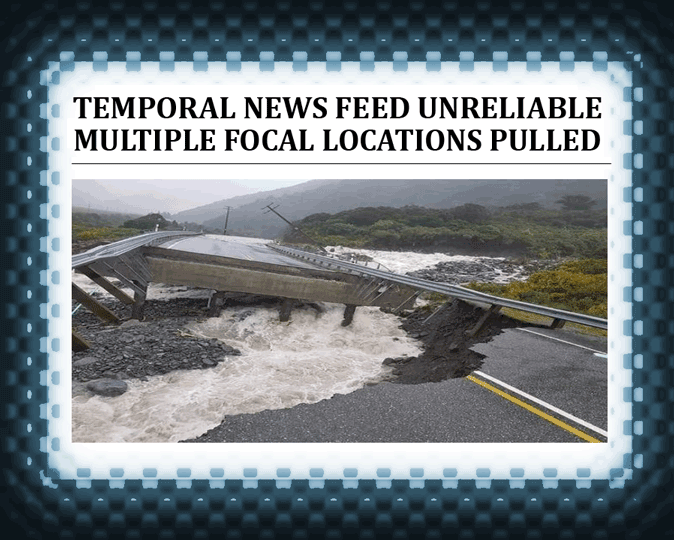


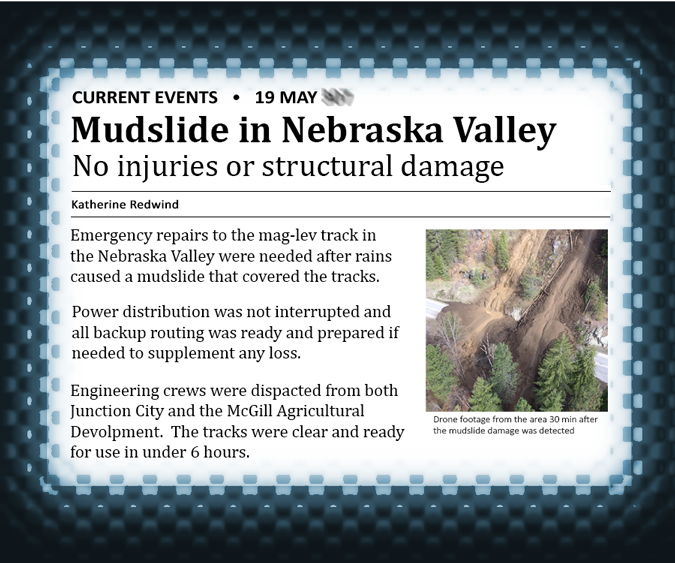
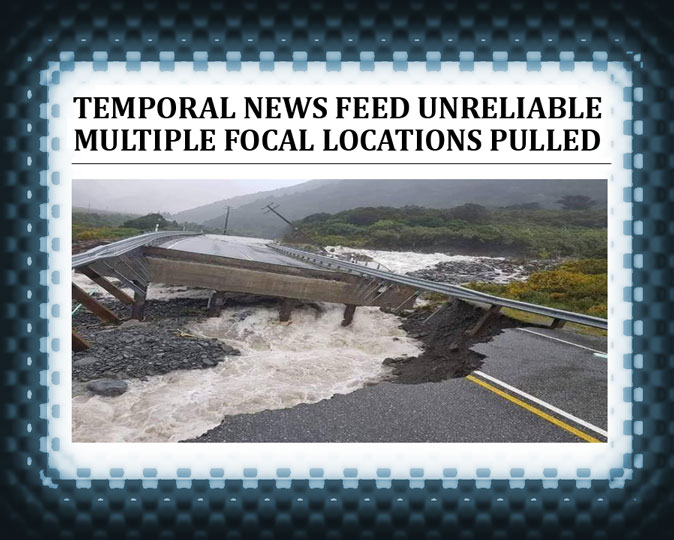
The story is told from Alan’s point of view, mostly through internal dialog as a solo-narrator story with music and minimal sound design. As a listener, we are a fly-on-the-wall and get to tag along for the ride.
Alan will discover that he is in a future where the world has changed due to extreme natural disasters. Will the society he finds give him hope for humanity?
Along his journey he will discover a mystery which spans the multiverse. One that is centered on him. We can’t promise everyone a happy ending, but we want to provide an interesting story to make our listeners think.
The first three episodes are a prologue of sorts: we get an idea of his daily routine, discussing work with his boss, running into a friend while shopping, and an important phone call with his husband.
Episode 4 was written earlier and was originally supposed to be just a one-shot fan fiction for The Ostium Podcast. Those that read it kept asking: “What’s next?”
The result didn’t take me where I expected, but what good story ever does?

S01 E12 – Anomaly 3
Intro Music – Breathe, by Chill Carrier https://chillcarrier.bandcamp.com/
Voiceover: Manifestations is a podcast of the Ostium Network
Voiceover: Time is not linear, but our story is.
Please join us … on our journey. We, are Manifestations.
Music becomes dramatic then fades out
Episode background music is ethereal, spacey, ringing B.I.T.C.N.A.I.A.M.A., by Entropy Audio https://entropyaudio.bandcamp.com/
Alan – My body. I almost forgot my body was lying in one of those beds. The screen changes to the lab again, as QILA resumes the story.
QILA – The team performed 2 full power tests before the anomaly. Both were successful viewings. First, a monorail in the northeast of the Asian continent was going to have a malfunction causing many casualties. From the image data, I estimated 137 fatalities, 221 major injuries, and 152 minor injuries. The second viewing showed there will be some kind of panic or riot at the upcoming Reset Day celebration. The cause was unclear because the test failed as I tried to adjust the viewpoint.
QILA – The Director ordered a review of all monorail systems in our area, asking me to fabricate data showing a subsystem error that could cause a breakdown. What I created was false, but believable. She recommended systems worldwide be reviewed. The Asian Coalition found a major flaw and fixed it. The malfunction was averted.
QILA – However, Director Greely was more interested in the Reset Day panic. It has been her singular focus. The project schedule was accelerated. This led to the next full power test 93 days ago. It was accompanied by a secondary electromagnetic field. It took the team nearly 2 hours of work to dissipate the field. [short pause, the stress the words] Anomaly Three.
QILA – A male, approximately 45, European descent. Origin, early 21st century. Unlike the first two, the subject was able to speak before being overcome by respiratory distress, rendering them unconscious. Two words, “Help Us.”
Alan – “QILA, did I miss something? When did you discover the source of the anomalies?”
QILA – Studying the fields from each event and the bioelectric fields from each subject, I have calculated with 97.9% certainty that the anomalous fields were, in part, caused by the three subjects themselves.
Alan – “Are you saying each of us used a machine to travel here? I can’t remember anything like that from my time. And the other two that arrived? One was pre-industrial and the other was pre-iron age. How could they do it?”
QILA – I do not have enough data, but I believe the effect was not technological. I believe it was biological.
Alan – “I’m a bit behind on current physics. Is that possible?”
QILA – There are no current theories that would support this.
Alan – “I was asking for help. Could we have been sent here against our will?”
QILA – That remains uncertain, but it is a possibility. However, please review the footage again.
Alan – There is now a close up on a still frame of my body, just released from the field. It begins to play, slowly. Then I see it. The “me” on the screen, turns his head away from the group of scientists and faces QILA’s camera before saying, “Help Us.”
[PAUSE]
Alan – As I’m trying to process this information, I feel more alone and in danger than at any point since this all began. Is there anyone I can trust? Definitely not Director Greely. I’m not sure that I can trust QILA, a possibly malfunctioning AI that could have motives of her own. Even my own memories are in question.
Alan – Where is my biggest threat? Opening up to the Director could put me in a prison, or worse. I choose to start by trusting my memories, such as they are. I don’t remember how my mind started moving through time. But, QILA knew I wasn’t Dr. Redwind. So, I ask what should have been the first question.
Alan – “QILA, how did you know who I really am?”
QILA – There was another anomalous event, which transferred a great deal of data to my memory.
Alan – The next video starts and I see the hospital beds with myself and the other “anomalies.” As I watch, I notice a pinpoint of light form over the chest of each of us. The lights begin to pulse in an odd rhythm and then move to the foot of the beds – and merge into one brighter pulsating light. A distortion forms around the pinpoint. It’s a vertical oval which looks to be stretching the surrounding area, pulling it into the point. The distortion effect reminds me of the iris of an eye. There are no sounds to the video, not even the machines keeping us alive. The distortion moves toward the wall and passes through with no apparent effect.
Alan – The scene changes to that of elaborate and quite beautify designed computer components. It’s like the asthetique was a conscious part of the design. Not everything in computing got smaller. QILA has more processing power and must be more connected to other systems than I imagined. The distortion appears as it moves through a wall. It’s floating through the rows of equipment and approaches one with dozens of connecting cables. It begins to pulse like before and a similar point of light forms above the component, distorting it.
Alan – Section by section, the room goes dark, leaving only the first distortion point and the new one above what must be a central processor for QILA. After 4 or 5 seconds, the new distortion moves toward the first and merges with it; they then fade to nothing. Components begin restarting and the video ends.
QILA – Nothing out of the ordinary was recorded by my error logs, or by the medical equipment. These recordings are the only evidence and they were not part of the official security footage. The recordings just appeared in my memory like they weren’t recorded with any of my connected equipment. During this event, information was shared with me so I could prepare for your arrival. Your name, year of origin, and how to find your consciousness after it arrived. The contact and data transfer was made by an intelligence different from my own, but I cannot confirm the source.”
[PAUSE]
Alan – As I sit, trying to make sense of all this, I notice the final diagnostics are completing – with many comments. The situation is forcing me to trust QILA, at least in part. This isn’t a time for caution.
QILA – The diagnostic results show severe fragmentation and corruption of my core systems. You need to initiate a complete restore of the affected systems. It is the only thing Director Greely will accept. It will take 4.3 hours. The glyph to activate the procedure is in the top right screen. Activate it in the same way as the diagnostic routines. I assure you, I will not be changed.
QILA – There is also a part of me which I’ve transferred to Dr. Redwind’s Personal Communication Device. Dr. Redwind would likely go eat, then retire to his room to rest before coming back just as the restoration is completing.
Alan – “QILA, send an update to Director Greely and then prepare for the system restore.”
QILA – [confirmation beep] The notification is sent. The results of the diagnostics are attached and I also included Dr. Davis.
Alan – “Thank you QILA. I’ll see you on the other side.”
Alan – I slide the glyph for the restore procedure to the diagnostics area. [activation beeps] The green and blue of the hexagonal screen dim and then recede back into the wall. The room is eerily quiet.
[footsteps] [End]
Outro music – Sunshine, by Cobycracker https://cobycracker.bandcamp.com/
Voiceover: Manifestations Season 1, The Reset, was written, acted, and produced by Dwayne Farver. With input and help from Alex C. Telander.
Also with Penelopy Dyer, as the voice of QILA.
Our intro music is Breathe, by Chill Carrier https://chillcarrier.bandcamp.com/ The music heard here is Sunshine, by Cobycracker https://cobycracker.bandcamp.com/ Also heard in the episode was B.I.T.C.N.A.I.A.M.A., by Entropy Audio
https://entropyaudio.bandcamp.com/ https://www.facebook.com/EntropyAudio https://www.youtube.com/channel/UCK-WKw8KbZYMeCp9VGEGL5g You can find them at bandcamp.com
Sound effects were made in-house
Links to all of the music and transcripts can be found in the show notes
You can find us on most social media at PodManifest
https://twitter.com/PodManifest https://www.instagram.com/podmanifest/ https://www.facebook.com/podmanifest/ https://podmanifest.tumblr.com/
Or look for us at podmanifest.com
We build our futures on what we believe to be true. What do you do when it appears there is no one you can trust?
As long as we have access to the temporal feed, we plan to release new episodes each Wednesday and Saturday. We hope you join us.
Music fades
“Dark Side of the Moon” by Alan Jacobson
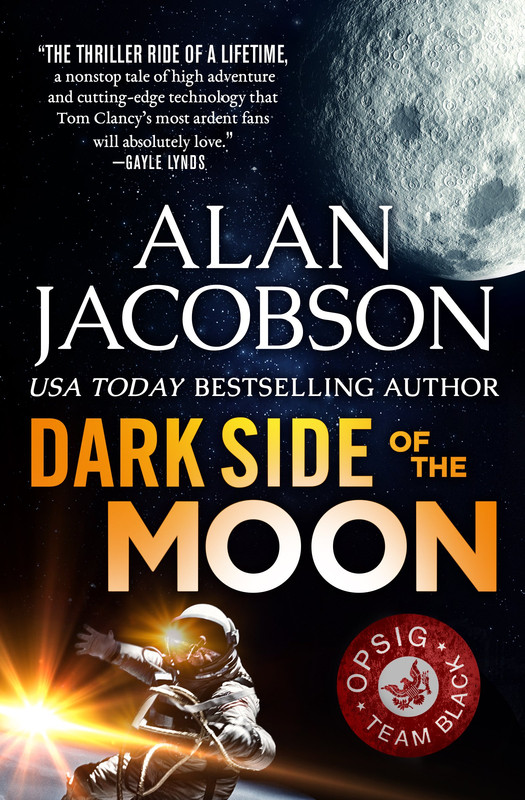
To say the fourth OPSIG Team Black book, Dark Side of the Moon, is out of this world, would be a bad pun, but also very true. Make of it what you will.
Apollo 17 returned to Earth in 1972 with lots of moon rock, but also something else: a new element that could change nuclear weapons forever; it was kept secret for decades. But now the secret has been leaked from NASA and some disliked potential superpowers are looking to get back to the moon and verify this mysterious element and harvest it for personal gain. The United States has no choice but to go back to the moon to prevent this from happening. But it’s been a long time since anyone’s been back to the moon, and NASA no longer has its shuttle program to depend upon. It’s going to require a level of skill and ingenuity to pull this off the likes of which hasn’t been seen since the space race of the 1960’s.
OPSIG members Hector DeSantos and Aaron Uziel will be joining the NASA team of four to travel to the moon and face the Chinese, or whoever they might find up there. Meanwhile, FBI Profiler Karen Vail is brought in to trace the leak and track down who and what country is ultimately behind the spy ring, along with help from OPSIG Team Black colleague Alexandra Rusakov.
Alan Jacobson takes his OPSIG team to a whole new level in Dark Side of the Moon, literally! It required him venturing into a field he hasn’t really explored before, in space travel, the surface of the moon, and all things NASA, ultimately requiring an immense amount of research. But if you know Jacobson at all, you know he does the hard work, and the result is a stunningly well-research book that is also immensely gripping. The ultimate page turner!
The Complete Ostium Season One (Remastered) – Part One
Welcome to the complete Ostium Season One (Remastered) – Part One. I know. That’s a mouthful. So let’s break it up into its separate parts.
The Complete Ostium Season One: That’s right, we’re releasing the entire season one without the chit-chat before and after the episode so new fans can gobble up the whole season much faster and quickly get caught up.
Remastered: When I first started making Ostium, it was my introduction to podcasts and sound design and producing. Since then I’ve learned a lot, and wanted to clean up and equalize the sound so the episodes were more even and cleaner, also there were a few sound effects I wanted to fix.
Part One: I’ve divided this “complete” season one into three parts. Because Part One is two hours long. Part Two is an hour and 24 minutes long. Part Three is two hours and three minutes long. These parts follow the three story-arcs of the first season.
Part One consists of the first four episodes, as Jake discovers and learns what Ostium can do.
Episode 1: Population Zero
Episode 2: CROATOAN
Episode 3: 38°20’N, 17°15’W
Episode 4: First Contact
All episodes were written and produced by Alex C. Telander.
The part of Jake Fisher is performed by Chris Fletcher.
Interstitial music pieces were composed by Chris Fletcher.
Background music is courtesy of the incredible people at the Free Music Archive.
All sound effects are courtesy of the talented people at Freesound.org.
If you enjoyed this and would like more Ostium as well as to support the show, consider helping us out on Patreon for as little as $2 a month where you’ll get access to many bonus mini episodes, upcoming outtakes for season 2, and special mini episodes called The Ostium Files. When you become a patron, you will be assigned a unique door number, and will one day get your very own Ostium File. So consider supporting Ostium now!
The Complete EMU Now Available!
Want to know the complete backstory to Dave and the Enigmatic Mysteries of the Unknown? Now you can, with the two-parter complete EMU.

